The house
Made slowly, in Lahore
Ferfi Jog began in a two-room workshop off Gulberg with four cutters, one closing machine and a stubborn opinion about welts. We still hold that opinion.
Why we do not make cheaper shoes
A cemented shoe — sole glued to upper — costs a fraction to make and lasts about eighteen months of daily wear before the bond gives up. There is nothing dishonest about it, but it is a disposable object, and a disposable object cannot be a good shoe.
We build on a Goodyear welt because it makes the sole a consumable and the shoe permanent. A pair bought in 2019 has been resoled twice and looks better now than it did new. That is the whole argument, and it is the only one we have.
The rest follows from it. Full-grain leather rather than corrected grain, because corrected grain cannot patina. Leather insoles that mould to the foot. Brass and steel where other makers use plastic. None of it is clever — it is just the older way, kept.
Bench to box
Five stages, seventy-two hours
- 01
Reading the hide
Every hide is graded and read before a knife touches it. Leather stretches along the spine and holds firm at the shoulder, so the vamp is cut from one region and the quarters from another. Get this wrong and the shoe bags out at the instep within a season.
- 02
Clicking and closing
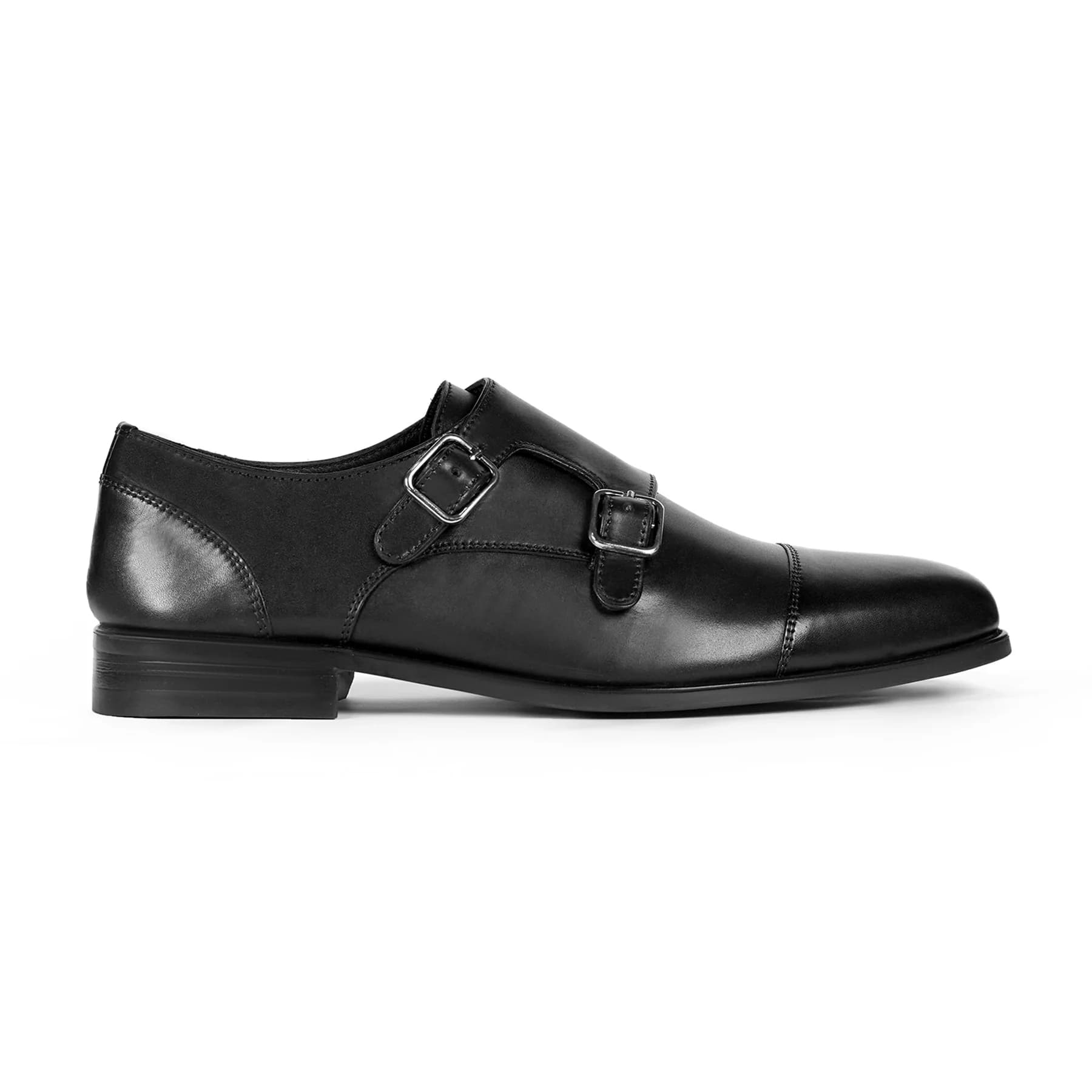
Panels are cut by hand — clicking — then skived thin at the edges so seams sit flat rather than ridged under the foot. Closing joins them into an upper. A cap-toe oxford is eleven panels and forty-one separate operations before it has any shape at all.
- 03
Lasting
The upper is soaked, pulled over a wooden last and tacked down. It stays there for seventy-two hours. This is the step nobody can rush: the leather has to learn the shape and keep it, and it only learns slowly.
- 04
The welt
A strip of leather is stitched through a rib on the insole and out through the upper. The outsole is then stitched to that strip — never to the upper itself. It is why a cobbler can lift the sole off in five years and give you back the same shoe, new underneath.
- 05
Finishing
Edges are trimmed, burnished and waxed. The toe is boned and built up in thin layers of cream and polish until it holds a mirror. Then it is boxed with a dust bag, a shoehorn, and a card with the name of the person who lasted it.
72h
on the last, per pair
280+
hand operations
2 yr
construction warranty